
Your Browsing History
BEST SELLERS


BEST SELLERS
In Wired Networking
Our most popular products, based on sales and updated frequently.Shop Department
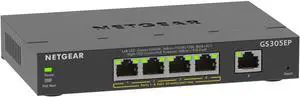
Netgear GS305EP 5-Port Gigabit Ethernet SOHO Plus Easy Smart Managed Essentials PoE+ Switch with 4-Port PoE+ (63W), GS305EP-100NAS
- Brand: NETGEAR
- Part Number: GS305EP-100NAS
- Switch Type: managed
- Format: Desktop Wall Mountable
- Model #: GS305EP-100NAS
- Item #: 1B4-00AS-001M8
- Return Policy: 15-Day Return Policy
$54.99
$79.99
Free Shipping
The device has been working flawlessly with my Peplink router, Geekom IT13 and NAS system!

Netgear GS316 16-Port Gigabit Ethernet Unmanaged Essentials Switch, GS316-300NAS
- Brand: NETGEAR
- Part Number: GS316-300NAS
- Format: Desktop Wall Mountable Rack-mountable
- Standards: IEEE 802.1p IEEE 802.3az IEEE 802.3ab IEEE 802.3u IEEE 802.3i IEEE 802.3x IEEE 802.3
- Model #: GS316-300NAS
- Item #: N82E16833222362
- Return Policy: 15-Day Return Policy
$64.99
$84.99
Free Shipping
I really like this switch. It has all the great management features you would want, the GUI makes sense, VLANs work as expected, it has POE, and it's got a great slim form factor for wall mounting and getting it out of the way. Comes with the screws necessary to wall mount as well.
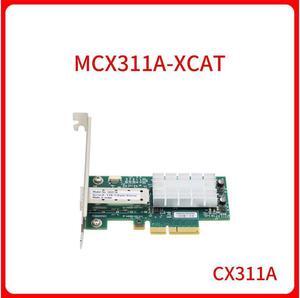
Mellanox MCX311A-XCAT CX311A ConnectX-3 EN Network Card 10GbE SinglePort SFP+
- Model #: MCX311A-XCAT
- Item #: 9SIA4A0K9D5642
- Return Policy: View Return Policy
$39.49
Free Shipping
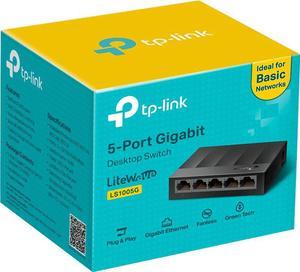
TP-Link Litewave 5 Port Gigabit Ethernet Switch | Desktop Ethernet Splitter | Plastic Case | Unshielded Network Switch | Plug & Play | Fanless Quiet | Unmanaged (LS1005G)
- Brand: TP-Link
- Switch Type: desktop
- Format: Desktop
- Standards: IEEE 802.3i/802.3u/ 802.3ab/802.3x
- Model #: LS1005G
- Item #: 0XP-001U-00557
- Return Policy: 15-Day Return Policy
$14.99
Free Shipping
Although I've only had this for a couple days, I can report setup was a breeze. It does take a bit to understand things are defined, but if you read through the manual, the information is there, if terse. Once you get the hang of it, VLANs using /q are a easy to define. Haven't dug into qos, link aggregation or mirroring, but the setup seems simple enough. They are just not part of my use case. At this price point there is no competition. Except perhaps m*krotik.
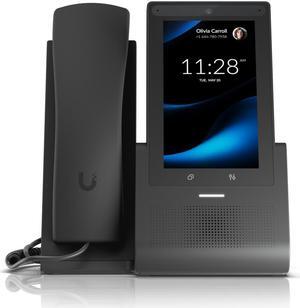
Ubiquiti Networks G3 Touch Pro (UTP-G3-Touch-Pro)
- Parts: 1 Year
- Labor: 1 Year
- Model #: UTP-G3-Touch-Pro
- Item #: 9SIA8H5KFK4557
- Return Policy: View Return Policy
$240.12
Free Shipping

Ubiquiti Dream Machine Pro Max, 10G Cloud Gateway (UDM-Pro-Max)
- WAN Ports: (1) 2.5 GbE RJ45 port (1) 10G SFP+ port
- LAN Ports: (8) GbE RJ45 ports (1) 10G SFP+ port
- Brand: Ubiquiti Networks
- Series: Gateways
- Model #: UDM-Pro-Max
- Item #: 9SIAK14K8N7380
- Return Policy: View Return Policy
OUT OF STOCK
Sold Price: $799.99
Free Shipping
Here's why I got one for my personal use. - 2.5Gb and 10Gb WAN capability - 5Gb IPS routing (IPS on most of their low end routers is bad.) - Built in storage for camera video - Rock solid Ubiquiti reputation
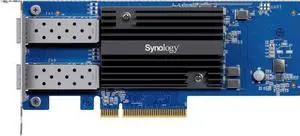
Synology E10G30-F2 Dual-port 10GbE SFP+ PCIe 3.0 x8 add-in card for Synology systems | E10G30-F2
- Model #: E10G30-F2
- Item #: 9SIAFJ8KTT8805
- Return Policy: View Return Policy
$257.69
Free Shipping
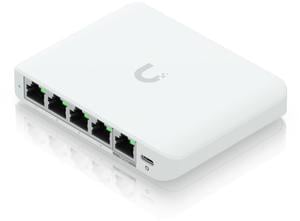
Ubiquiti Flex Mini 2.5G, 5-port 2.5G PoE Switch (USW-Flex-2.5G-5)
- Brand: Ubiquiti Networks
- Series: Network Switch
- Part Number: USW-Flex-2.5G-5
- Format: Desktop
- Model #: USW-Flex-2.5G-5
- Item #: 9SIAD6HKKM4043
- Return Policy: View Return Policy
$118.28
$144.53
Free Shipping
UniFi compatible and suited to the kinds of awful environmental conditions the old Ubiquiti Tough Switch Pro was perfect for. Being managed by UniFi rather than UISP simplifies the network, so it's GREAT to have this niche filled. Surprisingly useful to have more ports, didn't know we needed them until we had the option.
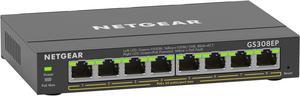
Netgear GS308EP 8-Port Gigabit Ethernet PoE+ Smart Managed Plus Switch (62W), GS308EP-100NAS
- Brand: NETGEAR
- Part Number: GS308EP-100NAS
- Format: Wall Mountable Desktop Rack-mountable
- Standards: IEEE 802.3 Ethernet IEEE 802.3ab 1000BASE-T IEEE 802.3u 100BASE-T IEEE 802.3ab 1000BASE-T EEE 802.1p Class of Service IEEE 802.1Q VLAN Tagging IEEE 802.3x Full-duplex Flow Control IEEE 802.3af PoE IEEE 802.3at PoE+
- Model #: GS308EP-100NAS
- Item #: N82E16833222146
- Return Policy: 15-Day Return Policy
$69.99
$99.99
Free Shipping
The switch has a very heavy and quality feel to it. POE+ works great with my cameras, and wireless access points.
Ubiquiti Gateway Max (UXG-Max)
- Brand: Ubiquiti Networks
- Ports: 8 x 1GbE RJ45
- Simultaneous Sessions: 2000
- Throughput: 5 Gbps
- Model #: UXG-Max
- Item #: N82E16833664092
- Return Policy: 15-Day Return Policy
$210.00
$2.99 Shipping
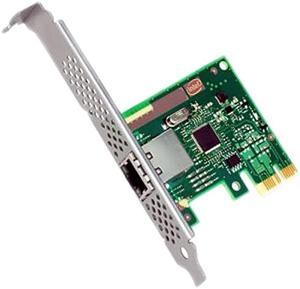
Intel I210T1 PCI-Express Network Adapter
- Brand: Intel
- Part Number: I210T1BLK
- Standards: EEE 802.3 (10BASE-T, 100BASE-TX, 1000BASE-T)
- Speed: 10/100/1000Mbps
- Model #: I210T1BLK
- Item #: 9SIA4A0KEM7170
- Return Policy: View Return Policy
$49.99
Free Shipping
The obvious question is why one would purchase this card over the far cheaper options. Generic 1Gbps NICs can be had for just over a tenth the cost, while Intel's desktop varieties run less than half the price of this card. Leaving aside the cheapest cards - ones I've found to cause more problems with data corruption and reliability than it's worth - the main reason to go with a server card is if you will be loading it heavily. If you're running your own datacenter, power-saving features such as EEE and DMA coalescing are handy, but that likely doesn't apply to most potential customers for this NIC. The I210T1 does an even better job at offloading calculations than previous generation NICs.Saturate a full 1Gbps connection with multiple streams and you'll see CPU usage drop in comparison to what it is with desktop cards. We put this card in a workstation to replace the on-board Realtek NIC. System CPU time dropped by 20-30% under very heavy network loads after switching to the I210T1. Another benefit to the I210T1 - and a possible reason to upgrade to this new model - is Audio Video Bridging (AVB) support. When working on projects where multiple media streams need to be perfectly synchronized, AVB worked wonders. Older NICs simply could not keep everything synced perfectly. We needed to work on 10Gbps connections instead. Being able to accomplish the same feat with a much cheaper card is great! The I210T1 is tiny. It fits easily even in systems with bulging heatsinks and video cards.
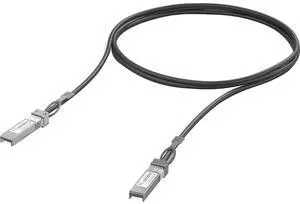
Ubiquiti 10G SFP+ Direct Attach Cable, 1m, Black (UACC-DAC-SFP10-1M)
- Brand: Ubiquiti Networks
- Part Number: UACC-DAC-SFP10-1M
- Feature: Supported Data Rate: 10 Gbps CABLE FEATURES: Wire: Copper Connector Type: SFP+ to SFP+ Jacket Color: Black Jacket Material: PVC Jacket Outer Diameter: 4.2 mm (0.17") Bend Radius: Min. 22mm (0.87")
- Model #: UACC-DAC-SFP10-1M
- Item #: 1A0-006V-000B2
- Return Policy: 15-Day Return Policy
$22.99
$4.99 Shipping

Ubiquiti Pro 48 PoE, 48-Port Layer 3 PoE++ Switch (USW-Pro-48-POE (600W))
- Brand: Ubiquiti Networks
- Part Number: USW-Pro-48-POE (600W)
- Format: Rackmount
- Network Management Type: Managed
- Model #: USW-Pro-48-POE (600W)
- Item #: 9SIA4P0K656349
- Return Policy: View Return Policy
$1,099.00
$27.85 Shipping
40 POE+ and 8 POE++ ports 4 10Gib SPF+ ports Layer 3 features Quiet fans

Ubiquiti Aggregation, 8-Port Layer 2 Switch (USW-Aggregation)
- Brand: Ubiquiti Networks
- Series: Network Switch
- Part Number: USW-Aggregation
- Format: Rackmount
- Model #: USW-Aggregation
- Item #: 0XP-00UP-000G1
- Return Policy: 15-Day Return Policy
OUT OF STOCK
Sold Price: $269.00
Free Shipping
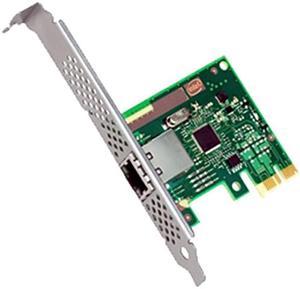
Intel Ethernet Server Adapter I210, Single-port Gigabit Ethernet server adapter for entry-level servers and audio-video applications | I210T1
- Brand: Intel
- Part Number: I210T1
- Standards: EEE 802.3 (10BASE-T, 100BASE-TX, 1000BASE-T)
- Speed: 10/100/1000Mbps
- Model #: I210T1
- Item #: 9SIA4A0K9D5474
- Return Policy: View Return Policy
$51.69
Free Shipping
Easy installation. Had to download software, but no problem there. I really noticed a difference in the smoothness and speed of internet. I had never used an Nec , but I'm glad I did.
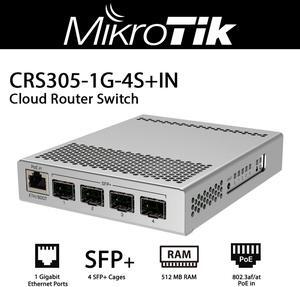
Mikrotik CRS305-1G-4S+IN Switch with 4 SFP+ 10Gbps Ports and 1 Gigabit Ethernet Port
- Model #: CRS305-1G-4S+IN
- Item #: 9SIAM0PK7F6652
- Return Policy: View Return Policy
$144.38
Free Shipping
- Couldn't believe the amazing performance of this unit right out of the box! I received the rated 1.2GB/s out of the box. No configuration necessary. - It comes with RouterOS & SwitchOS built-in. You can use this as a router? That's insane. I most likely won't be, but knowing the possibility is there is pretty neat.
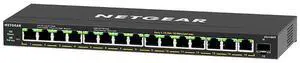
Netgear GS316PP 16-Port Gigabit Ethernet Unmanaged PoE+ Essentials Switch (183W), GS316PP-100NAS
- Brand: NETGEAR
- Part Number: GS316PP-100NAS
- Format: Desktop Wall Mountable Rack-mountable
- Standards: IEEE 802.3 CSMA/CD 802.3az Energy Efficient Ethernet
- Model #: GS316PP-100NAS
- Item #: N82E16833222063
- Return Policy: 15-Day Return Policy
$159.99
$234.99
Free Shipping
Silent and cool with plenty of room for power requirements with my PoE network cameras.
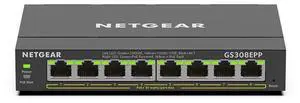
Netgear GS308EPP 8-Port PoE+ Gigabit Ethernet Plus Switch 123W, GS308EPP-100NAS
- Brand: NETGEAR
- Part Number: GS308EPP-100NAS
- Format: Wall Mountable Desktop Rack-mountable
- Standards: IEEE 802.3 Ethernet IEEE 802.3ab 1000BASE-T IEEE 802.3u 100BASE-T IEEE 802.3ab 1000BASE-T EEE 802.1p Class of Service IEEE 802.1Q VLAN Tagging IEEE 802.3x Full-duplex Flow Control IEEE 802.3af PoE IEEE 802.3at PoE+
- Model #: GS308EPP-100NAS
- Item #: N82E16833222147
- Return Policy: 15-Day Return Policy
$119.99
$139.99
Free Shipping
Super easy setup. Plenty of POE ports.
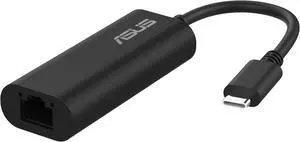
ASUS USB-C2500 V2 2.5Gbps Type-C Wired Network Adapter, RJ45 LAN, USB-C High-Speed Transfer, Compatible with 2.5G/1G/100Mbps
- Brand: ASUS
- Speed: 2.5Gbps
- Connectors: 1 x RJ45
- Interface: USB 3.0 Type-C
- Model #: USB-C2500 V2
- Item #: N82E16833320629
- Return Policy: 15-Day Return Policy
$28.99
$34.99
$4.99 Shipping

Ubiquiti Pro Max 24 PoE, 24-Port Layer 3 PoE Switch (USW-Pro-Max-24-PoE (400W))
- Brand: Ubiquiti Networks
- Part Number: USW-Pro-Max-24-PoE
- Format: Rackmount
- Network Management Type: Managed
- Model #: USW-Pro-Max-24-PoE
- Item #: 9SIAK14K8P8679
- Return Policy: View Return Policy
$849.99
Free Shipping
Fast performance and PoE+/++ out of the box! Small footprint and overall a performance beast for my network