
Your Browsing History
BEST SELLERS


BEST SELLERS
In Network Interface Cards
Our most popular products, based on sales and updated frequently.Shop Department
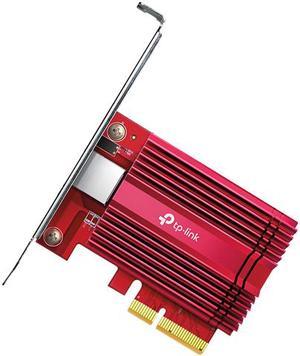
TP-Link 10Gbps PCIe Network Card (TX401) - PCIe to 10 Gigabit Ethernet Network Adapter, Supports Windows 10/8.1/8/7, Windows Servers 2019/2016/2012 R2, and Linux, Including a CAT6A Ethernet Cable
- Brand: TP-Link
- Standards: IEEE 802.3, IEEE 802.3u, IEEE 802.3ab, IEEE 802.3bz, IEEE802.3an, IEEE802.3az, IEEE 802.3x
- Speed: 10Gbps
- Connectors: 1 x RJ45
- Model #: TX401
- Item #: 9SIA2TNKTY9559
- Return Policy: View Return Policy
$84.99
$99.99
Free Shipping
I was instantly able to take advantage of my new 2000mbps internet service.
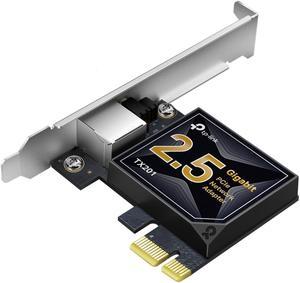
TP-Link TX201 PCI-Express Interface Cards
- Connectors: 1 x RJ45
- Wake On LAN: Yes
- Model #: TX201
- Item #: N82E16833704675
- Return Policy: 15-Day Return Policy
$28.99
$3.99 Shipping
It is solid made. Not a cheap piece of plastic.
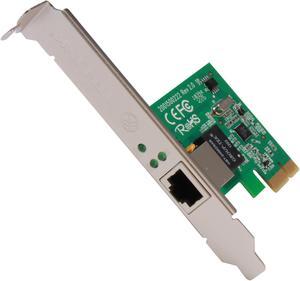
TP-Link TG-3468 PCI-Express Network Adapter (with Normal and Low Profile Bracket)
- Standards: IEEE 802.3, 802.3u, 802.3ab, 802.3x, 802.1q, 802.1p, CSMA / CD, TCP / IP
- Connectors: 1 x RJ45
- LEDs: 1000 Mbps Link / Act, 100 Mbps Link / Act, 10 Mbps Link / Act
- Temperature: Operating Temperature: 0 ~ 40 degree Celsius (32 ~ 104 degree Fahrenheit) Storage Temperature: -40 ~ 70 degree Celsius (-40 ~ 158 degree Fahrenheit)
- Model #: TG-3468
- Item #: N82E16833704060
- Return Policy: 15-Day Return Policy
$14.99
$2.99 Shipping
Good price and good specs Was plug and play on my Win10x64 machine
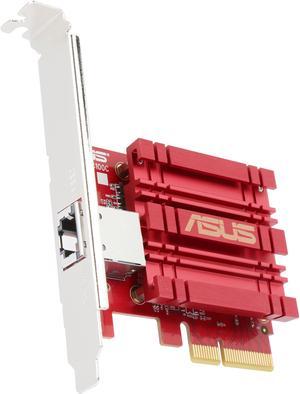
ASUS XG-C100C 10G Network Adapter PCI-E x4 Card with Single RJ-45 Port and built-in QoS for Use with Windows 10 / 8.1 / 8 / 7 and Linux Kernel 4.4 / 4.2 / 3.6 / 3.2 (XG-C100C), TAA Compliant
- Standards: IEEE 802.3an 10GBASE-T IEEE 802.3u 100Base-TX Fast Ethernet IEEE 802.3ab 1000BASE-T Gigabit Ethernet IEEE 802.3az Energy Efficient Ethernet IEEE 802.1p Priority Queuing
- LEDs: Dual color Speed LED Single color Link / Act LED
- Temperature: Operating Temperature: 0 ~ 40 degree Celsius (32 ~ 104 degree Fahrenheit) Storage Temperature: -40 ~ 85 degree Celsius (-40 ~ 185 degree Fahrenheit)
- Dimensions: 0.81" x 3.33" x 4.72"
- Model #: XG-C100C
- Item #: N82E16833320272
- Return Policy: 15-Day Return Policy
$97.99
Free Shipping
I had no issue getting 10g speed with my ASUS 10G switch and CAT 6a cable. It is great getting 500+ mbs copying files from one computer to another.
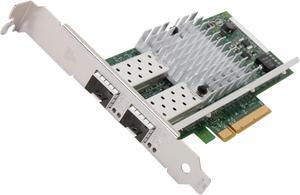
Intel X520-DA2 Dual Ports 10 Gigabit Ethernet Converged Network Adapter, PCI Express 2.0 x8, Low Profile
- Brand: Intel
- Model: E10G42BTDABLK
- Part Number: X520-DA2
- Standards: IEEE 802.3ae, IEEE 802.3ap, IEEE 802.3an, IEEE 802.3ad
- Model #: E10G42BTDABLK
- Item #: 9SIA4A0K9D6887
- Return Policy: View Return Policy
$41.29
Free Shipping
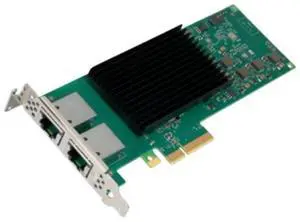
Intel 10Gigabit Ethernet Network Adapter E610-XT2 - PCI Express 4.0 x4 - Intel E610-XAT2 - 2 Port(s) - 2 - Twisted Pair - Low Profile and Full Height Bracket Height E610XT2
- Brand: Intel
- Part Number: E610XT2
- Speed: 10 Gbps
- Connectors: RJ45 Category 6, Category 6A, Category 5e up to 100m
- Model #: E610XT2
- Item #: 9SIA24GKSV1775
- Return Policy: View Return Policy
$312.22
Free Shipping
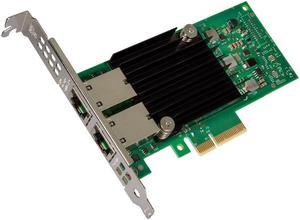
Intel Ethernet Converged Network Adapter X550, Backward compatible 10GBASE-T network adapter | X550T2
- Brand: Intel
- Part Number: X550-T2
- Speed: Dual-port 100Mb/s: 3.9 W (Typical Power) 4.9 W (Maximum Power) Dual-port 1GbE 5.5 W (Typical Power) 6.4 W (Maximum Power) Dual-port 10GbE 11.2 W (Typical Power) 13.0 W (Maximum Power)
- Connectors: 2 x RJ45
- Model #: X550T2
- Item #: 9SIA0ZXK024139
- Return Policy: View Return Policy
$137.40
Free Shipping
AWesome card
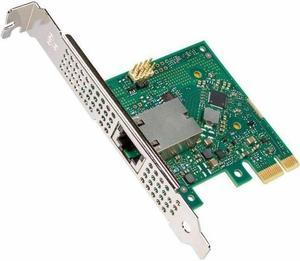
Intel Single Port RJ45 2.5/1GbE Ethernet Network Adapter I226-T1
- Brand: Intel
- Part Number: I226T1
- Standards: Ethernet
- Speed: 2.5Gbps
- Model #: I226T1
- Item #: 14U-0045-004X0
- Return Policy: 15-Day Return Policy
$77.99
$79.99
Free Shipping
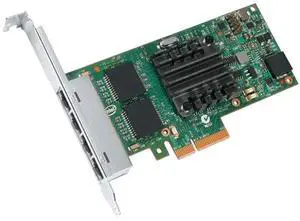
Intel Ethernet Server Adapter I350-T4
- Brand: Intel
- Part Number: I350T4V2BLK
- Standards: EEE 802.3 (10BASE-T, 100BASE-TX, 1000BASE-T)
- Speed: 10/100/1000Mbps
- Model #: I350T4V2BLK
- Item #: 9SIA4A0K9D5660
- Return Policy: View Return Policy
$117.98
Free Shipping
Windows 10 Pro support VLANS Jumbo Frames More ports than i could ever use.
Mellanox MCX311A-XCAT CX311A ConnectX-3 EN Network Card 10GbE SinglePort SFP+
- Model #: MCX311A-XCAT
- Item #: 9SIA4A0K9D5642
- Return Policy: View Return Policy
$39.49
Free Shipping
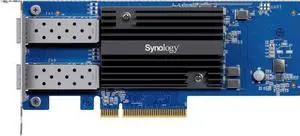
Synology E10G30-F2 Dual-port 10GbE SFP+ PCIe 3.0 x8 add-in card for Synology systems | E10G30-F2
- Model #: E10G30-F2
- Item #: 9SIAFJ8KTT8805
- Return Policy: View Return Policy
$257.69
Free Shipping
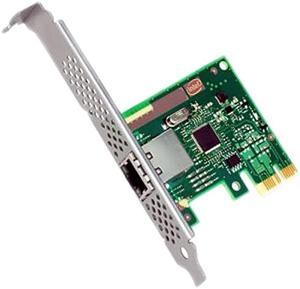
Intel I210T1 PCI-Express Network Adapter
- Brand: Intel
- Part Number: I210T1BLK
- Standards: EEE 802.3 (10BASE-T, 100BASE-TX, 1000BASE-T)
- Speed: 10/100/1000Mbps
- Model #: I210T1BLK
- Item #: 9SIA4A0KEM7170
- Return Policy: View Return Policy
$49.99
Free Shipping
The obvious question is why one would purchase this card over the far cheaper options. Generic 1Gbps NICs can be had for just over a tenth the cost, while Intel's desktop varieties run less than half the price of this card. Leaving aside the cheapest cards - ones I've found to cause more problems with data corruption and reliability than it's worth - the main reason to go with a server card is if you will be loading it heavily. If you're running your own datacenter, power-saving features such as EEE and DMA coalescing are handy, but that likely doesn't apply to most potential customers for this NIC. The I210T1 does an even better job at offloading calculations than previous generation NICs.Saturate a full 1Gbps connection with multiple streams and you'll see CPU usage drop in comparison to what it is with desktop cards. We put this card in a workstation to replace the on-board Realtek NIC. System CPU time dropped by 20-30% under very heavy network loads after switching to the I210T1. Another benefit to the I210T1 - and a possible reason to upgrade to this new model - is Audio Video Bridging (AVB) support. When working on projects where multiple media streams need to be perfectly synchronized, AVB worked wonders. Older NICs simply could not keep everything synced perfectly. We needed to work on 10Gbps connections instead. Being able to accomplish the same feat with a much cheaper card is great! The I210T1 is tiny. It fits easily even in systems with bulging heatsinks and video cards.
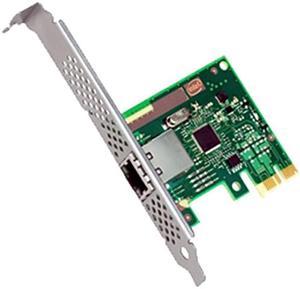
Intel Ethernet Server Adapter I210, Single-port Gigabit Ethernet server adapter for entry-level servers and audio-video applications | I210T1
- Brand: Intel
- Part Number: I210T1
- Standards: EEE 802.3 (10BASE-T, 100BASE-TX, 1000BASE-T)
- Speed: 10/100/1000Mbps
- Model #: I210T1
- Item #: 9SIA4A0K9D5474
- Return Policy: View Return Policy
$51.69
Free Shipping
-Great quality -Small size (but powerful) -Great drivers Intel makes reliable hardware, CPU's, SSD's, NIC's, in the past even MP3 players! There NIC's perform better than the Realtek onboard solution (I did benchmarks to confirm). The drivers provided are also better (they even give you a small explanation on what each option does). If 90% of your computer activity depends on your connection to the internet or network than everyone should consider upgrading their onboard NIC. I am using this on a desktop PC.
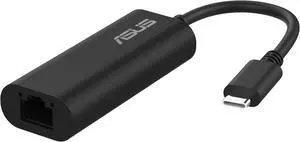
ASUS USB-C2500 V2 2.5Gbps Type-C Wired Network Adapter, RJ45 LAN, USB-C High-Speed Transfer, Compatible with 2.5G/1G/100Mbps
- Brand: ASUS
- Speed: 2.5Gbps
- Connectors: 1 x RJ45
- Interface: USB 3.0 Type-C
- Model #: USB-C2500 V2
- Item #: N82E16833320629
- Return Policy: 15-Day Return Policy
$28.99
$34.99
$4.99 Shipping
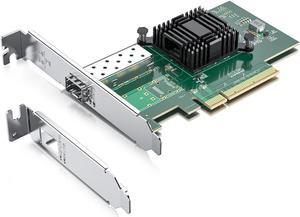
10Gtek For Intel X520-DA1, Intel E10G42BTDA Adapter Card with Intel 82599EN Controller 10Gb PCI-E Network Card, PCI Express2.0 x8, Single SFP+ Port, Support Windows Server/Linux/VMware
- Standards: IEEE802.3, IEEE802.3u, IEEE802.3ab
- Connectors: 1 x SFP+
- Drivers: Included
- Temperature: 0°C ~ 55°C
- Model #: 603149403413
- Item #: 9SIA9Z94VP3327
- Return Policy: View Return Policy
$39.99
Free Shipping
Works with the "UF-MM-10G Multi-Mode Fiber, 10 Gbps SFP+" and the Ubiquiti switch. 10x faster than 1G. Works with linux.
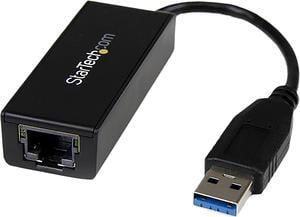
StarTech.com USB 3.0 to Gigabit Ethernet NIC Network Adapter
- Standards: IEEE802.3i, IEEE 802.3u, IEEE 802.3ab, IEEE 802.3az, IEEE 802.1q VLAN tagging
- Connectors: 1 x RJ45
- LEDs: Activity (Yellow) Link (Green)
- Temperature: Operating Temperature: 0°C to 40°C (32°F to 104°F) Storage Temperature: -20°C to 60°C (-4°F to 140°F)
- Model #: USB31000S
- Item #: 9SIBSWCKS02284
- Return Policy: View Return Policy
$34.99
Free Shipping
Working flawless. Used it to connect an Ethernet thermal camera and worked without a hitch. Windows 8 even installed the driver automatically via windows update.
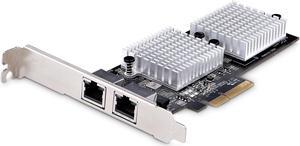
StarTech.com 2-Port 10Gbps PCIe Network Adapter Card, Network Card for PC/Server, PCIe Ethernet Card w/Jumbo Frame, NIC/LAN Interface Card
- Part Number: ST10GSPEXNDP2
- Standards: IEEE 802.3an (10GBASE-T) 802.3bz (5GBASE-T) 802.3bz (2.5GBASE-T) IEEE 802.3ab (1000BASE-T) IEEE 802.3u (100BASE-T) IEEE 802.3 (10BASE-T) IEEE P802.3az Energy Efficient Ethernet (EEE) IEEE 1588 (PTP) Wake-on-LAN (WOL) PCI Express Version 3.0
- Connectors: 2 x RJ45
- Wake On LAN: Yes
- Model #: ST10GSPEXNDP2
- Item #: N82E16833114446
- Return Policy: 15-Day Return Policy
$160.99
$309.99
Free Shipping
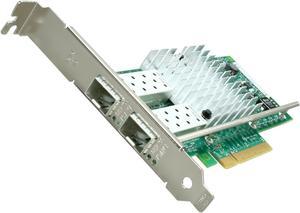
Intel E10G42BTDA PCI Express 2.0 x8 Server Adapter X520-DA2
- Brand: Intel
- Model: E10G42BTDA
- Part Number: X520-DA2
- Standards: IEEE 802.1Q, IEEE 802.1p, IEEE 802.3ad (LACP), IEEE 802.1ae, IEEE 802.1as
- Model #: E10G42BTDA
- Item #: 9SIBT5SKKD8911
- Return Policy: View Return Policy
$49.85
Free Shipping
Simple install, comes with both regular and low-profile brackets, very fast
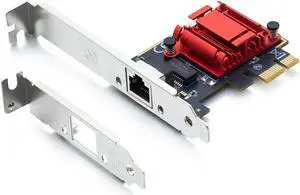
10Gtek For Intel I210T1 PCI-Express Network Adapter, 10/100/1000Mbps Gigabit Network Card with Intel I210 Chip Single RJ45 Port to PCI Express 2.1 x1
- Standards: IEEE802.3, IEEE802.3u, IEEE802.3ab
- Connectors: 1 x RJ45
- Temperature: 0°C ~ 55°C
- Model #: 603149403512
- Item #: 9SIA9Z952Y8117
- Return Policy: View Return Policy
$26.00
Free Shipping
Doesn't require any weird pro-grade server backplanes to connect, just a regular PCI Express slot If drivers are needed, they can be downloaded as a bundle beforehand and installed offline SFP+ ports accept a few varieties of transceiver, so you don't even need to replace your ethernet wiring to use this
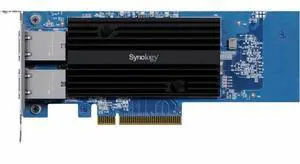
Synology E10G30-T2 Dual-port 10GbE 10GBASE-T Add-In Card for Synology Systems
- Model #: E10G30-T2
- Item #: 14U-005Y-00024
- Return Policy: 15-Day Return Policy
$259.99
$260.99
Free Shipping